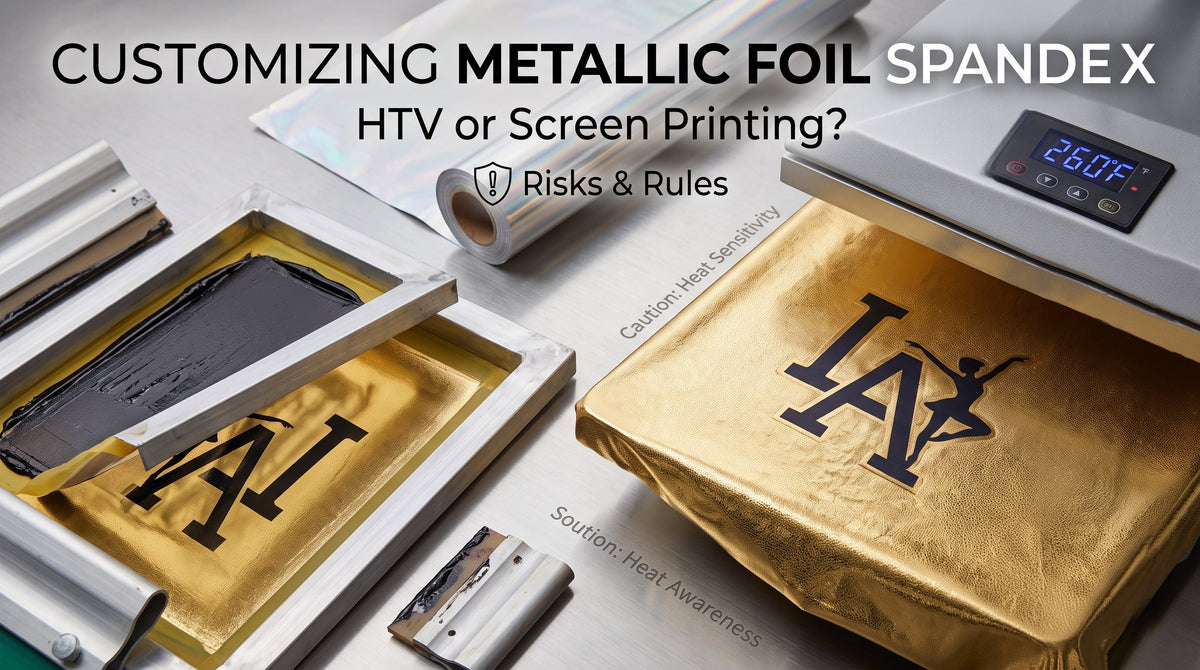
Adding custom logos, team names, or intricate character details to a shiny, metallic bodysuit is a common requirement for competitive dancewear and advanced cosplay. But when you are working with metallic foil spandex, standard customization methods like Heat Transfer Vinyl (HTV) or screen printing can quickly turn into a disaster.
The short answer is: yes, it is technically possible, but it is highly risky. Metallic foil fabrics require specialized techniques because they are incredibly sensitive to heat and chemical solvents. Here is everything you need to know before you press or print on your metallic fabrics.
The Problem: Heat is the Enemy of Foil
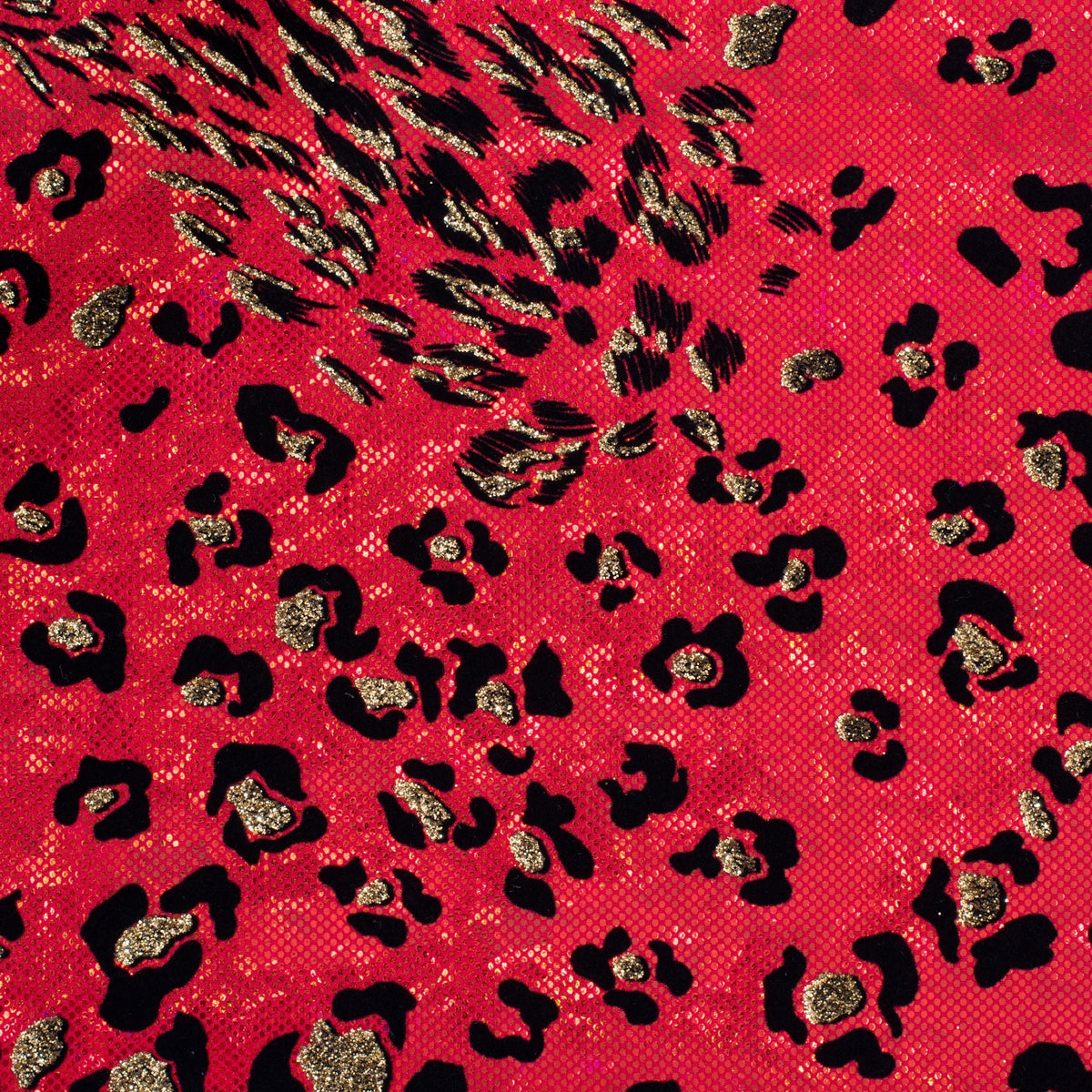
To understand why HTV and screen printing are difficult, you have to understand how metallic spandex is made. The base is typically a nylon or polyester spandex blend, but the shiny, metallic surface is a thin layer of polyurethane (PU) foil that is heat-pressed onto the fabric during manufacturing.
Because the foil is applied using heat, introducing high temperatures later on—like from a heat press or a flash dryer—will reactivate that bonding process. This causes the foil to melt, blister, lose its brilliant shine, or completely peel away from the base fabric.
Using Heat Transfer Vinyl (HTV) on Foil Spandex
If you must use HTV on a foil fabric, you cannot use standard vinyl settings. Standard HTV requires temperatures around 300°F to 315°F, which will instantly dull or melt your metallic foil.
-
Use Low-Temp HTV: You must purchase a specialized, low-temperature vinyl designed for heat-sensitive performance wear. These typically apply at much lower temperatures (around 260°F).
-
Protect the Surface: Always use a Teflon sheet or a piece of parchment paper to protect the surrounding foil from the direct heat of the press.
-
The Adhesion Risk: HTV adhesive is designed to sink into the woven fibers of a fabric. Because foil creates a smooth, solid barrier over the fibers, the HTV is only sticking to the foil layer, not the fabric itself. If the garment stretches heavily, the HTV may peel off, taking the foil layer with it.
Screen Printing on Foil Spandex
Screen printing presents a different set of challenges, primarily related to the ink-curing process and surface adhesion.
-
Curing Temperatures: Traditional plastisol screen printing inks require high heat (around 320°F) to cure properly. Running foil spandex through a standard conveyor dryer at these temperatures will warp and ruin the fabric.
-
Low-Cure Additives: If you are working with a professional screen printer, they must use a low-cure additive in their ink, which allows the design to set at a much lower temperature that the foil can withstand.
-
Specialty Inks: Water-based inks often will not adhere to the slick, non-porous surface of the foil. Synthetic, catalyst-curing inks are usually required to bond the design to the metallic surface without washing away.
The Best Alternatives for Customizing Foil
Because heat and ink are so temperamental on metallic surfaces, professional builders often rely on cold-application methods to customize foil dancewear and swimwear.
-
Appliqué: Cutting your design out of a contrasting stretch fabric and sewing it directly onto the garment is the most durable, professional method.
-
Cold Glue Rhinestones: Instead of using hot-fix rhinestones (which require a heat wand that can melt the foil), use flatback crystals and a flexible fabric adhesive like E6000 Fabri-Fuse.