
Whether you’re a cosplayer crafting a movie-accurate superhero suit, an athleticwear designer developing a custom brand, or a DIY enthusiast creating custom performance gear, there comes a time when off-the-shelf fabrics just won't cut it. You need a specific pattern, gradient, or color that you can't find anywhere.
This leads to the million-dollar question we hear almost daily at Spandex Palace: Can you dye or print on spandex?
The short answer is yes, but standard DIY methods won't work on these high-performance materials. If you try to use standard household dyes or basic transfer papers, you will likely end up with faded colors, patchy spots, or a design that cracks and peels the moment the fabric stretches.
Here is our deep-dive guide on how to successfully dye, print, and custom-craft on stretch fabrics.
Part 1: Dyeing Spandex (Understanding Fiber Chemistry)
Customizing stretch fabrics is entirely possible once you pair the right process with the right fiber blend. If you want to dye, look for Nylon-Spandex blends and use acid dyes; if you want to print vibrant, durable designs that won't crack under tension, choose Polyester-Spandex blends and use dye sublimation.
Ready to begin your next custom project? At Spandex Palace, we stock a vast selection of premium, high-quality nylon and polyester stretch fabrics by the yard with no minimum order.
Whether you’re testing out acid dyeing on a scrap or sourcing high-polyester bases for sublimation printing, our team in Los Angeles is here to help you find the perfect foundation. Browse our inventory online or come visit us to grab the exact fabric you need to make your vision a reality!
To successfully dye spandex, you must first understand that it is almost always blended with other synthetic fibers—usually nylon or polyester. Spandex itself is highly resistant to standard household dyes, meaning you have to target the "partner" fiber in the blend.
Why Standard Dyes Fail
Universal household dyes (like basic Rit or Dylon) are designed for natural fibers like cotton, linen, and wool. Synthetics lack the porous structure of natural fibers, meaning standard dyes will simply wash right out, leaving behind a faint, patchy stain.
Dyeing Nylon-Spandex Blends
If your stretch fabric is a nylon-spandex blend (very common for swimwear, dancewear, and costuming), you’re in luck. Nylon is highly receptive to color when using the right methods:
-
The Dye to Use: Acid Dyes. These are specially formulated to bond with the protein-like chemical structure of nylon fibers under high heat and acidic conditions (often using vinegar).
-
The Method: Dyeing requires a large pot of nearly boiling water on a stove, as sustained heat is necessary to force the nylon to absorb the pigment.
Dyeing Polyester-Spandex Blends
If your fabric is a polyester-spandex blend (common for athletic wear and compression gear), dyeing is much more difficult. Polyester is notorious for resisting dye.
-
The Dye to Use: Disperse Dyes
-
The Caveat: Disperse dyes require extremely high heat (sustained boiling) to penetrate the polyester fibers. Because spandex is highly sensitive to extreme heat, boiling it for long periods can permanently damage its elasticity, causing it to lose its "snap" and stretch. For this reason, we recommend printing rather than immersion dyeing for polyester-spandex blends.
Part 2: Printing on Spandex (The Sublimation Revolution)
If you want intricate patterns, logos, or photorealistic graphics on your stretch fabrics, printing is by far the best option.
However, you can’t use standard screen printing or iron-on transfers for highly elastic garments, because the ink sits on top of the fabric and will crack or flake when stretched. Instead, the industry-standard solution is dye sublimation.
What is Dye Sublimation?
Dye sublimation is a digital printing method that uses heat and pressure to transform special ink into a gas, which then infuses directly into the fibers of the fabric. Instead of sitting on top of the material, the ink becomes one with the fabric itself.
This offers three massive advantages for stretch fabrics:
-
Zero Hand-Feel: The fabric remains completely soft, lightweight, and breathable—essential for activewear.
-
Infinite Stretch: Because the ink is inside the fibers, the design can stretch as much as the fabric without cracking, peeling, or fading.
-
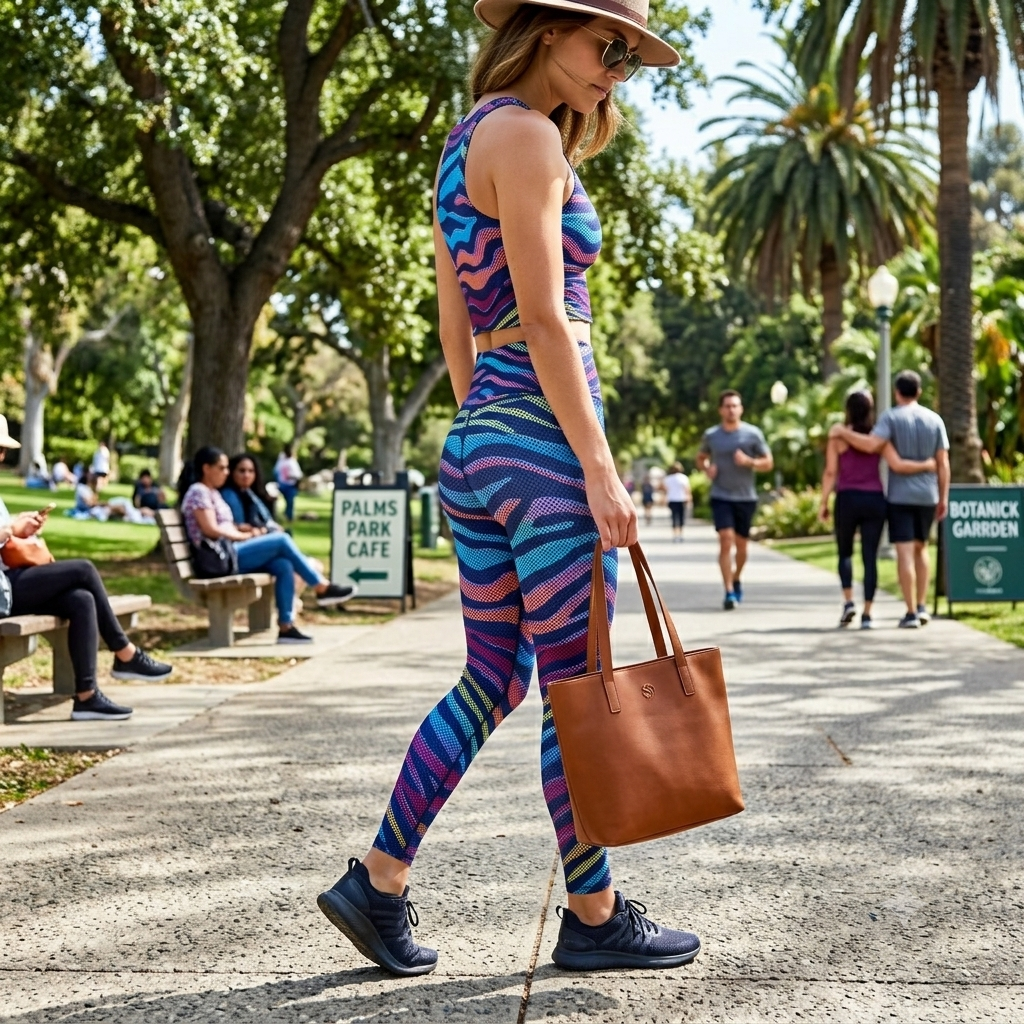
Complex Designs: You can print incredibly detailed, full-color designs, such as intricate cosplay armor, galactic patterns, or multi-colored athletic team logos.
The Catch: It Only Works on Polyester
Dye sublimation will not bond with natural fibers, and it has a very poor bond with nylon. It requires polyester to lock in the gas. For optimal results, you must use a polyester-spandex blend with at least 80% polyester content (often called "Prepared for Print" or PFP white fabric). When sublimated, the white base fabric absorbs the ink beautifully, resulting in permanent, rich, and vibrant designs.
Pro-Tip: Sublimation ink is translucent, meaning it only works on white or very light-colored fabrics. If you try to sublimate on dark or black fabrics, the design will be invisible!