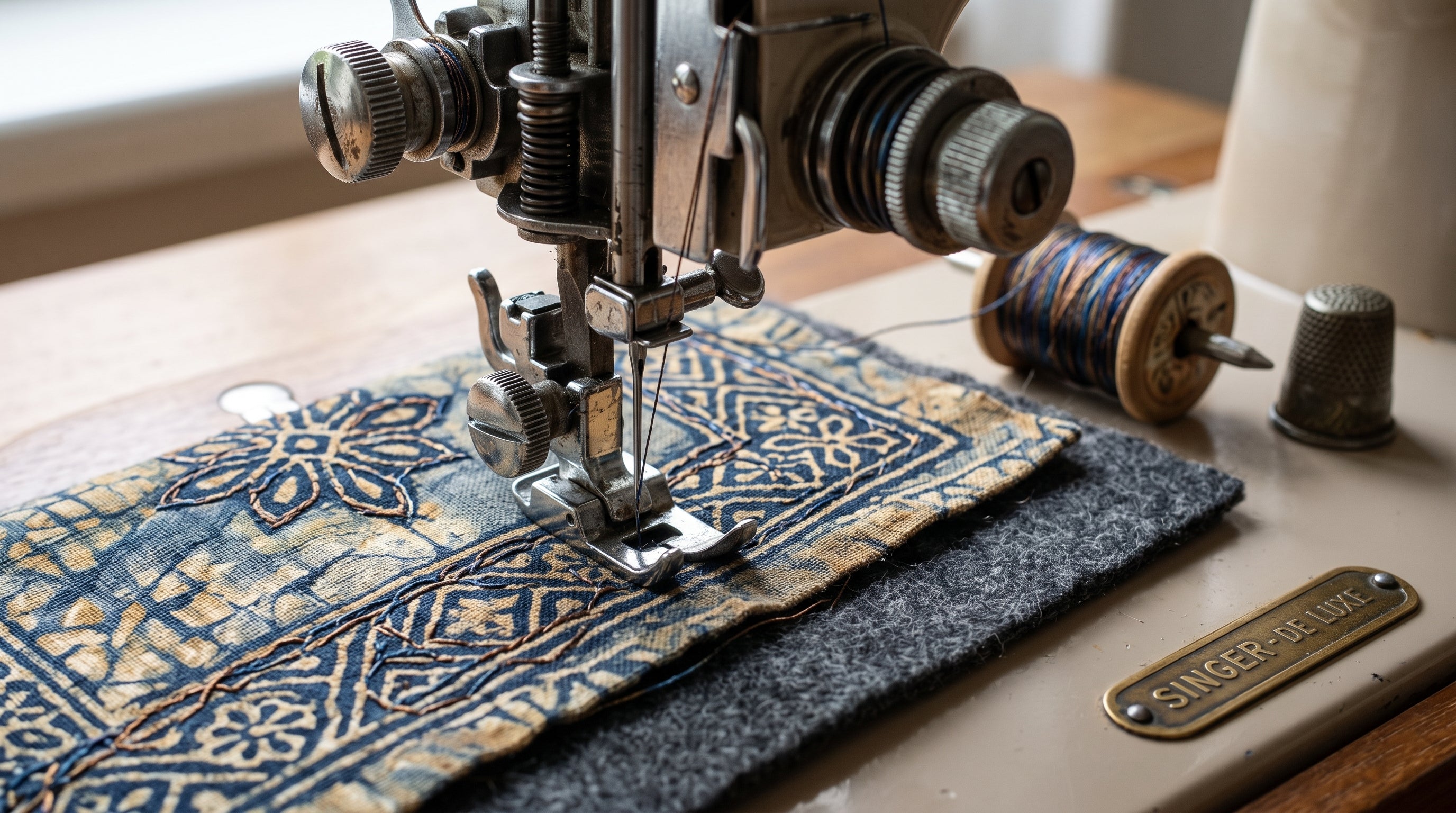
There is nothing quite as frustrating as sitting down to sew a beautiful piece of 4-way stretch nylon spandex, only to hear the dreaded grinding sound. You look down, and your sewing machine has completely swallowed your fabric, jamming it tightly down into the needle plate and bobbin area.
If your sewing machine is "eating" your spandex, tricot, or power mesh, you are not alone. This is one of the most common hurdles when sewing swimwear, dancewear, and cosplay garments. Here is the science behind why this fabric-sucking problem happens and the professional tricks you can use to stop it in its tracks.
Why Does It Happen?
The "fabric-sucking" issue usually boils down to a combination of three things:
The Wrong Needle: If you are using a standard universal needle, the tip is too sharp. Instead of gliding between the knit fibers of your spandex, a sharp needle aggressively punches the dense fabric. Because spandex is so flexible, the force of the needle simply pushes the fabric right down the hole of the throat plate.
-
Starting on the Edge: When you start your seam at the absolute very edge of your fabric, the feed dogs (the metal teeth under the presser foot) don't have enough material to grip. Without that traction, the needle pushes the unsupported edge straight down into the bobbin case.
-
A Wide Needle Plate Hole: If your machine is set up for zig-zag stitching, the hole in the needle plate is wide. Lightweight, stretchy fabrics lack the rigidity to bridge that gap, making them easy targets to get pushed under.
4 Easy Fixes to Stop the Jamming
1. The Tissue Paper Trick (The Ultimate Hack)
If your machine is being stubborn, place a piece of standard tissue paper (or tear-away stabilizer) directly underneath your fabric, between the spandex and the feed dogs. The tissue paper provides temporary rigidity, preventing the needle from pushing the fabric down the hole. Once your seam is finished, simply tear the tissue paper away!
2. Always Use a Ballpoint or Stretch Needle
This is non-negotiable for performance fabrics. Ballpoint needles have a slightly rounded tip designed to push elastane fibers aside rather than piercing them. This significantly reduces the downward force on the fabric and prevents skipped stitches and snapped threads.
3. Use a "Leader" Scrap
Never start sewing on the absolute edge of your garment piece. Instead, start your seam on a small scrap piece of spandex (a "leader"). Once you sew a few stitches into the scrap, feed your actual garment piece directly behind it without cutting the thread. Your feed dogs will already be engaged and moving smoothly, completely bypassing the edge-eating phase.
4. Upgrade Your Machine's Piercing Power

Sometimes, the issue is simply that a basic machine struggles to handle slippery or dense stretch fabrics smoothly. Upgrading to a robust model, like the SINGER® Heavy Duty 4411 or the SINGER® Heavy Duty 4452, provides the superior feed dog traction and adjustable presser foot pressure needed to handle everything from lightweight mesh to heavyweight 3D faux leather. For the ultimate stretch finish, investing in a serger like the SINGER® Heavy Duty 0460™ will simultaneously stitch, trim, and finish your seams without any puckering or jamming.
Stock Up on the Right Materials
Using the right techniques goes hand in hand with using premium textiles. At Spandex Palace, a Payman Fabrics company established in 1992, we specialize in high-performance stretch materials designed to bring your creations to life.
Need to test out your machine's tension before diving into a big project? Swatches of our in-house fabrics are always available!
📍 Shop our collections online and enjoy fast 2-day and priority shipping options, or choose local pickup at our Los Angeles showroom. 🎓 Fashion students: Don't forget to apply your 20% discount to your order!